|
1
|
|
|
2
|
- Bioaerosols, suspended biological particulate matter in air of which
some cause infectious diseases, have become a main cause of concern when
dealing with indoor air pollution.
- These compounds can circulate through a building after being deposited
outside near the air intake of a building’s heating, ventilation, and
air conditioning (HVAC) system, or after being released inside the
building and recirculated through the HVAC system.
- Ultraviolet Germicidal Irradiation (UVGI) can be used in order to damage
the DNA of bioaerosols so they are unable to reproduce (inactivation).
|
|
3
|
- Explore and compare bioaerosol sampling methods :
- Air Sampling
- Duct surface sampling
- Cooler condensate sampling (couldn’t achieve due to low relative
humidity)
- Determine the effectiveness of UVGI within ductwork at inactivating
bioaerosols.
|
|
4
|
|
|
5
|
|
|
6
|
|
|
7
|
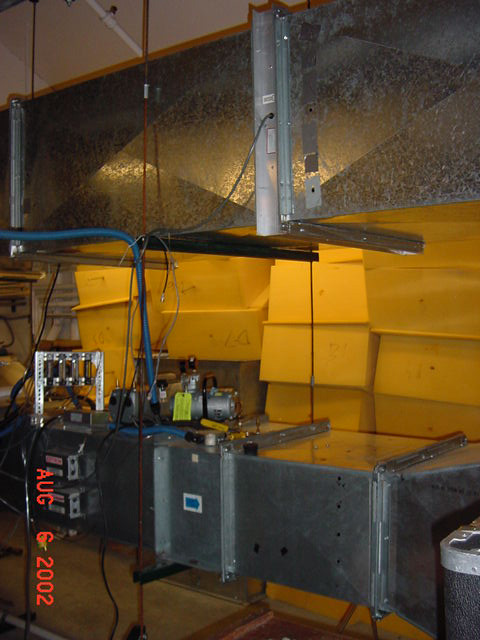
- Velocities in ductwork calibrated to achieve velocities consistent with
typical air flows and isokinetic air sampling.
- Typical air flows in commercial buildings: 10-20% Outdoor Air/80-90%
Recirculating Air
- Flowrates Achieved: 22%
Outdoor Air/88% Recirculating Air
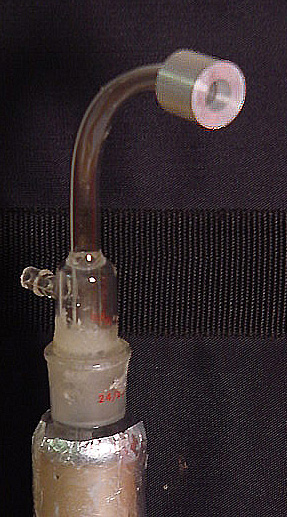
- Isokinetic Sampling:
“equal-velocity” sampling
- nozzle tip opening area (An) and sample volumetric
flowrate (Qm) must be adjusted to obtain a velocity Vn
= Qm/An equal to the
gas stream velocity (Vs) at the point of sampling
|
|
8
|
- Bacterial aerosol (Mycobacterium parafortuitum) generated for 90 min,
air samples collected for the last 30 minutes.
- Biological air samples collected during sampling using duplicate
impingers (AGI-30) filled with 30 mL of phosphate buffer solution (PBS) in
each of the three sampling locations.
- Duct surface samples collected by placing pieces of sheet metal onto
ductwork prior to experiments and collected afterwards to be rinsed with
PBS in order to perform microbiological analysis similar to the air
samples.
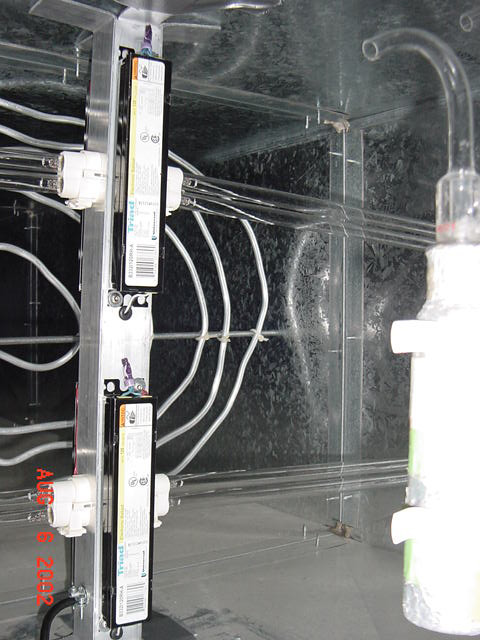
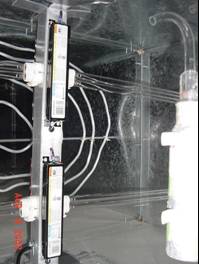
- UVGI lamps installed 0.38 m before sampling location in the
recirculation duct.
|
|
9
|
- Collected microorganisms quantified by:
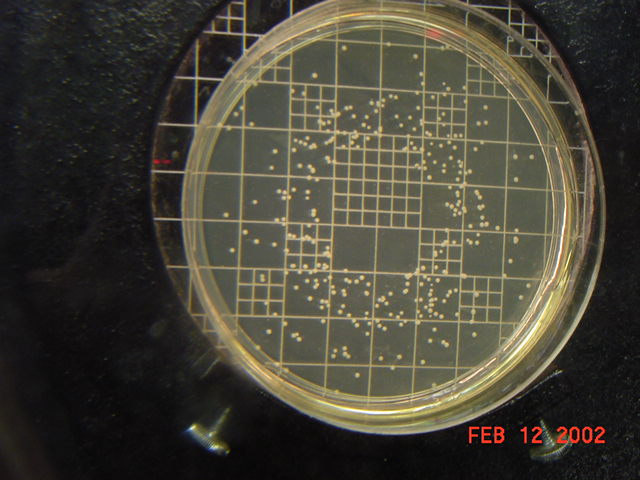
- Culturing (CFUs)
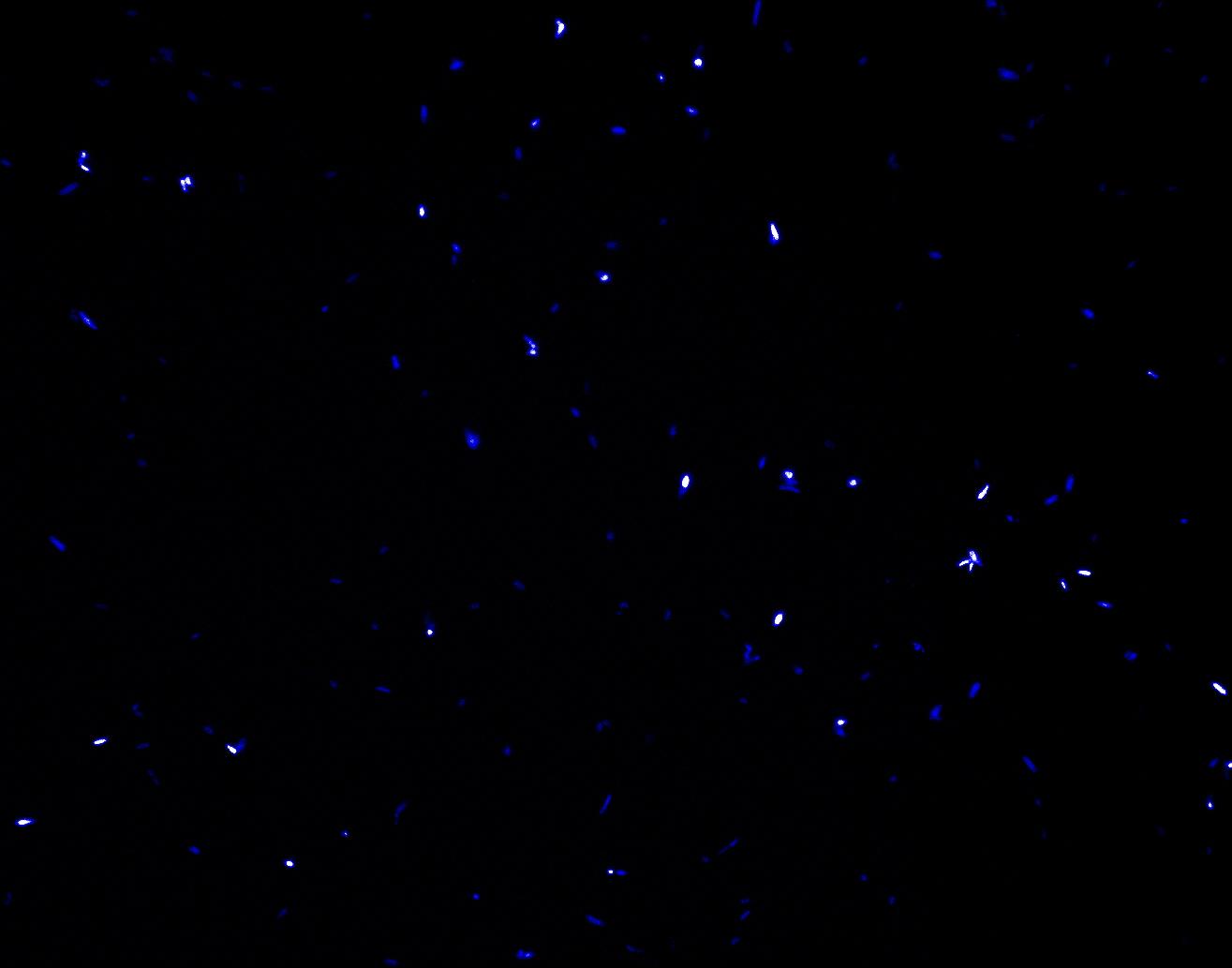
- Staining and direct counting with epifluorescent microscope
|
|
10
|
|
|
11
|
|
|
12
|
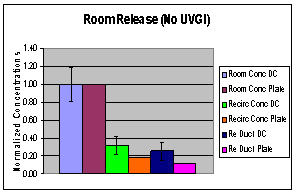
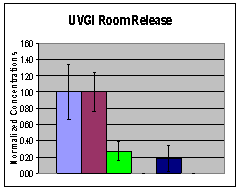
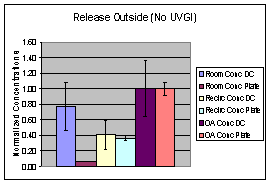
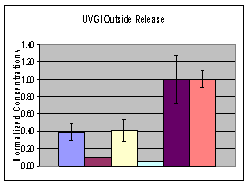
- Direct counts should not be affected by UVGI
- Plate counts should be reduced with UVGI
- CFU/DC
- Lower CFU/DC means more inactivation
|
|
13
|
- Duct sampling, while requiring less equipment, is not as sensitive as
air sampling
- When bioaerosols were released outside, UVGI in recirculating air duct was successful in inactivating
bacteria
- Our results show that in-duct UVGI lamps can be implemented in HVAC
systems to reduce viable bacterial concentration within the duct
- Experiments with more controls are needed to determine whether UVGI in
ducts is a dependable method of bioaerosol inactivation
|
|
14
|
|

 Notes
Notes