|
1
|
|
|
2
|
- Background
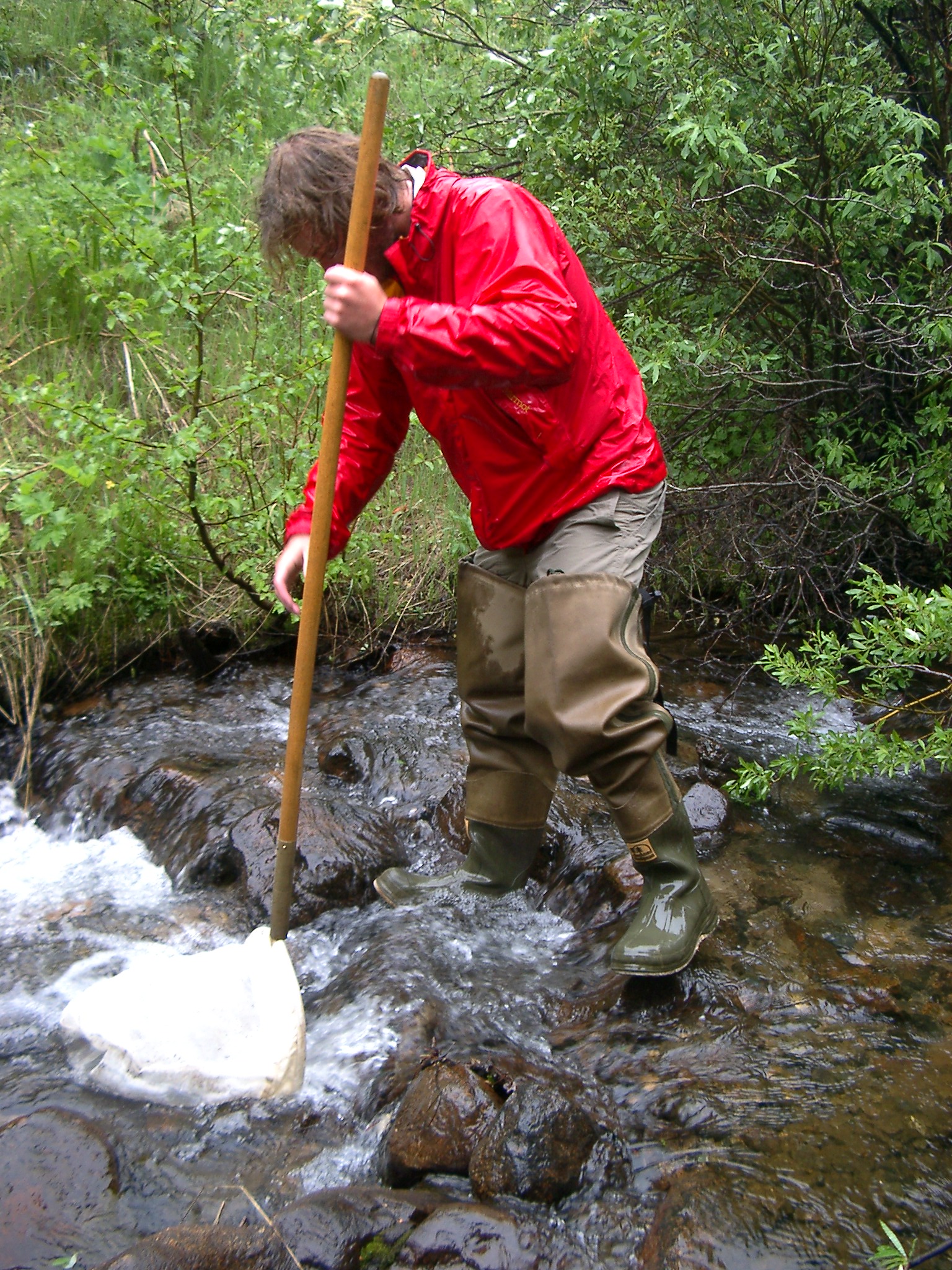
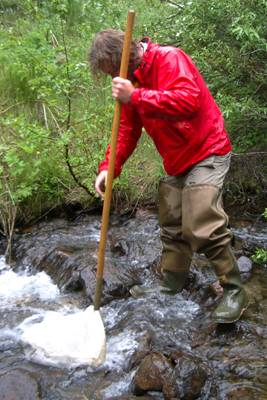
- Macroinvertebrate Sampling
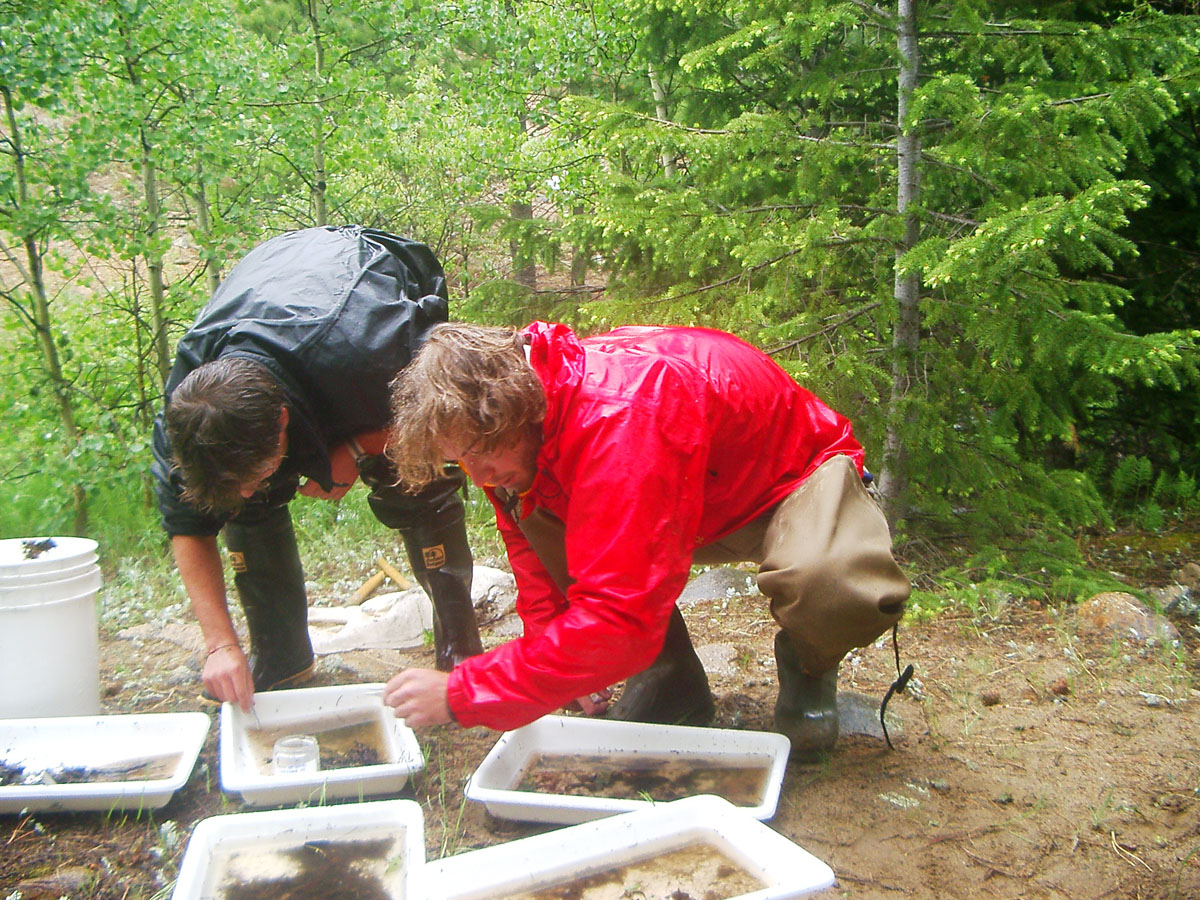
- Macroinvertebrate Preparation and Analysis
- Dissolved Organic Carbon Sampling and Analysis
- Results
- Conclusions
- Questions
|
|
3
|
|
|
4
|
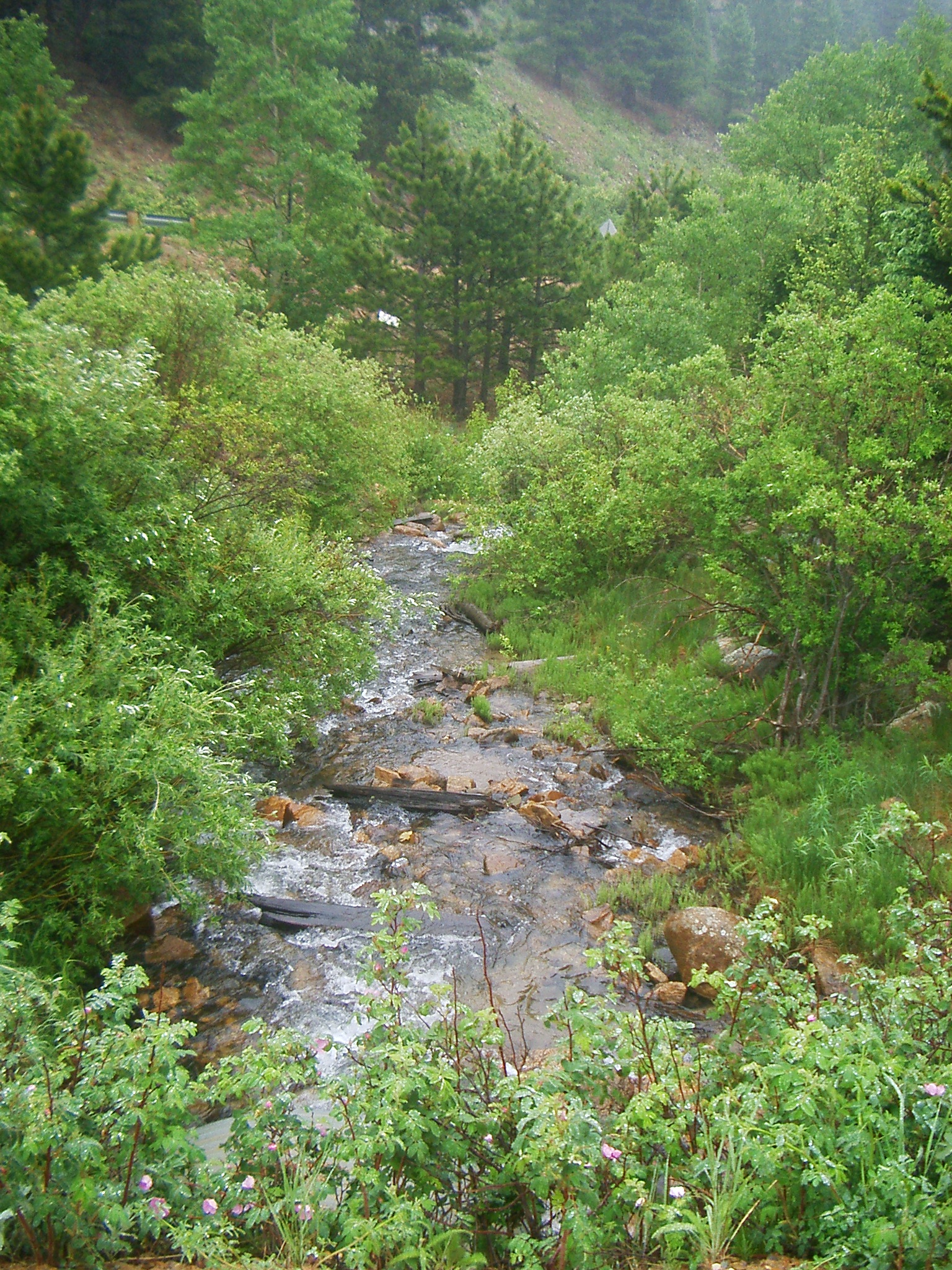
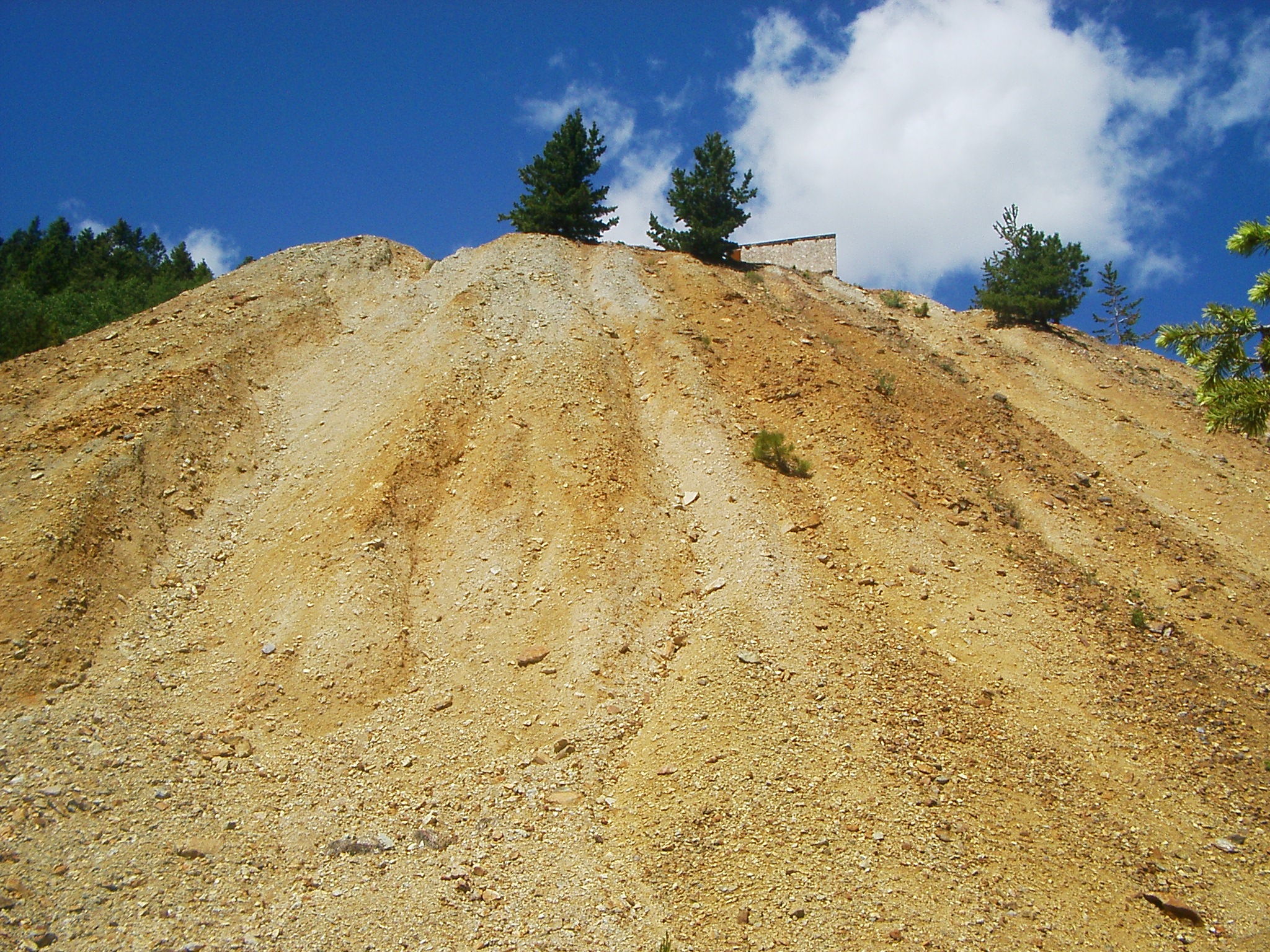
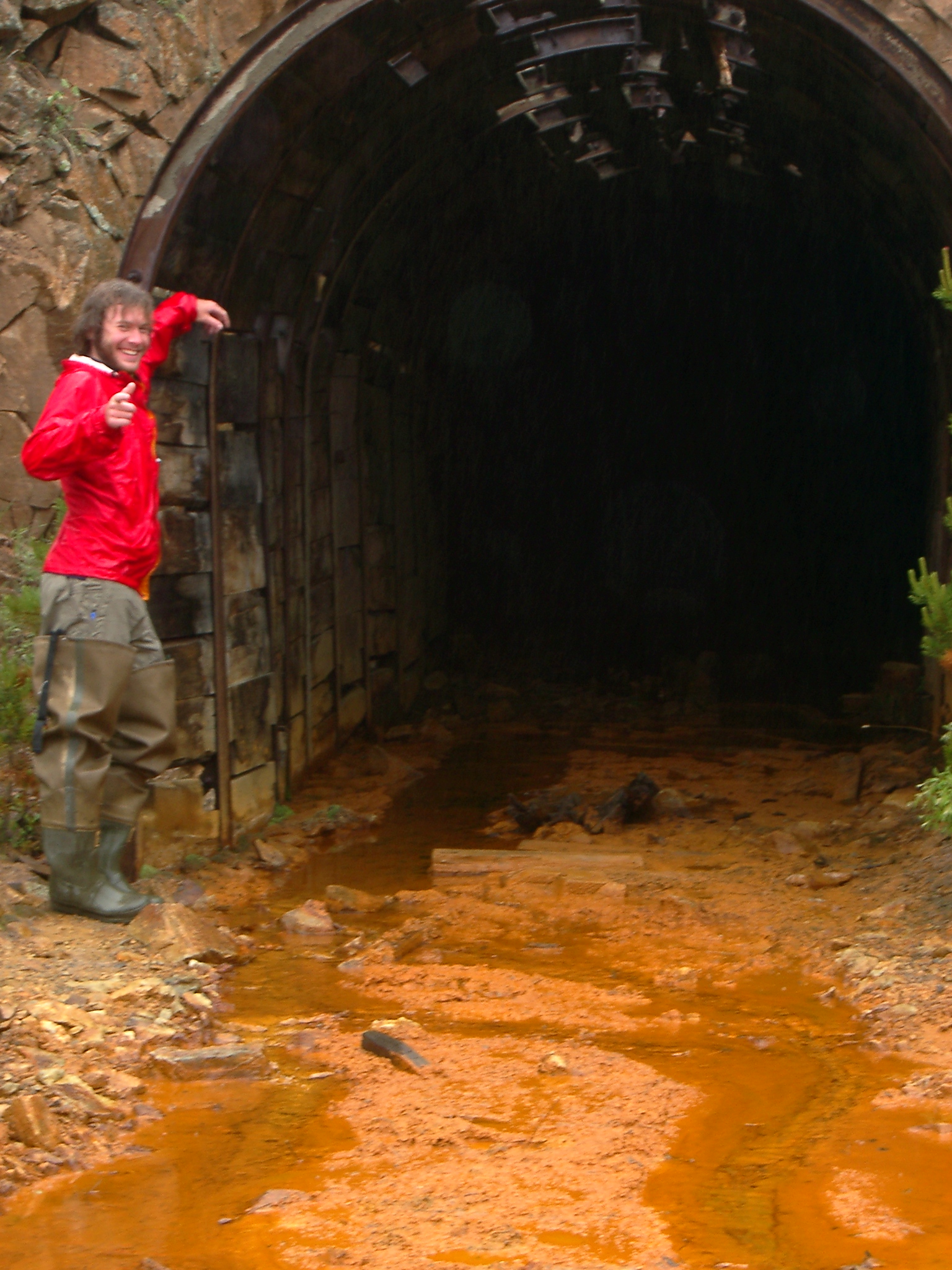
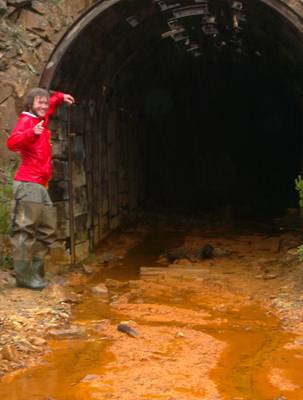
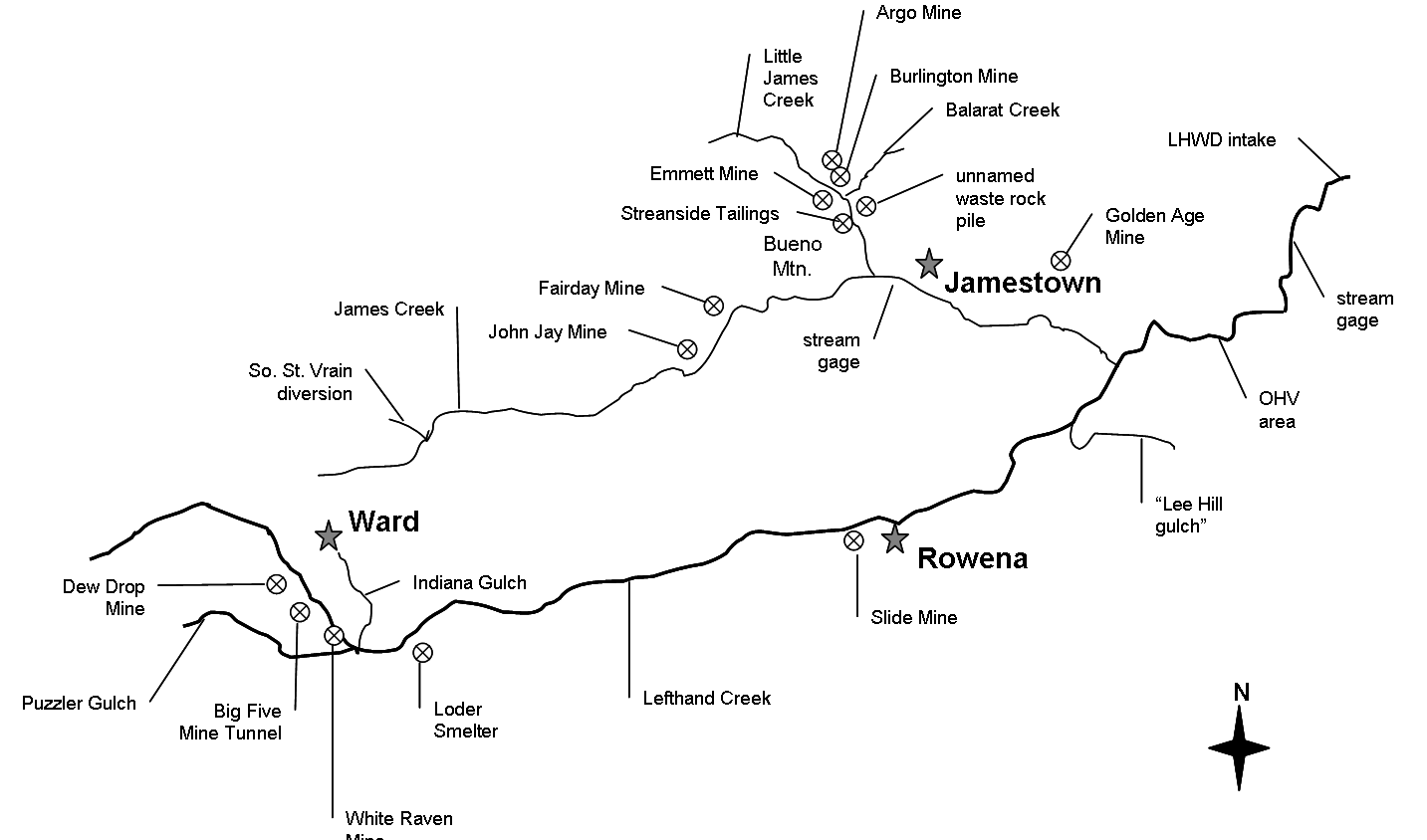
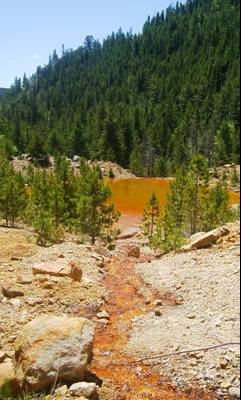
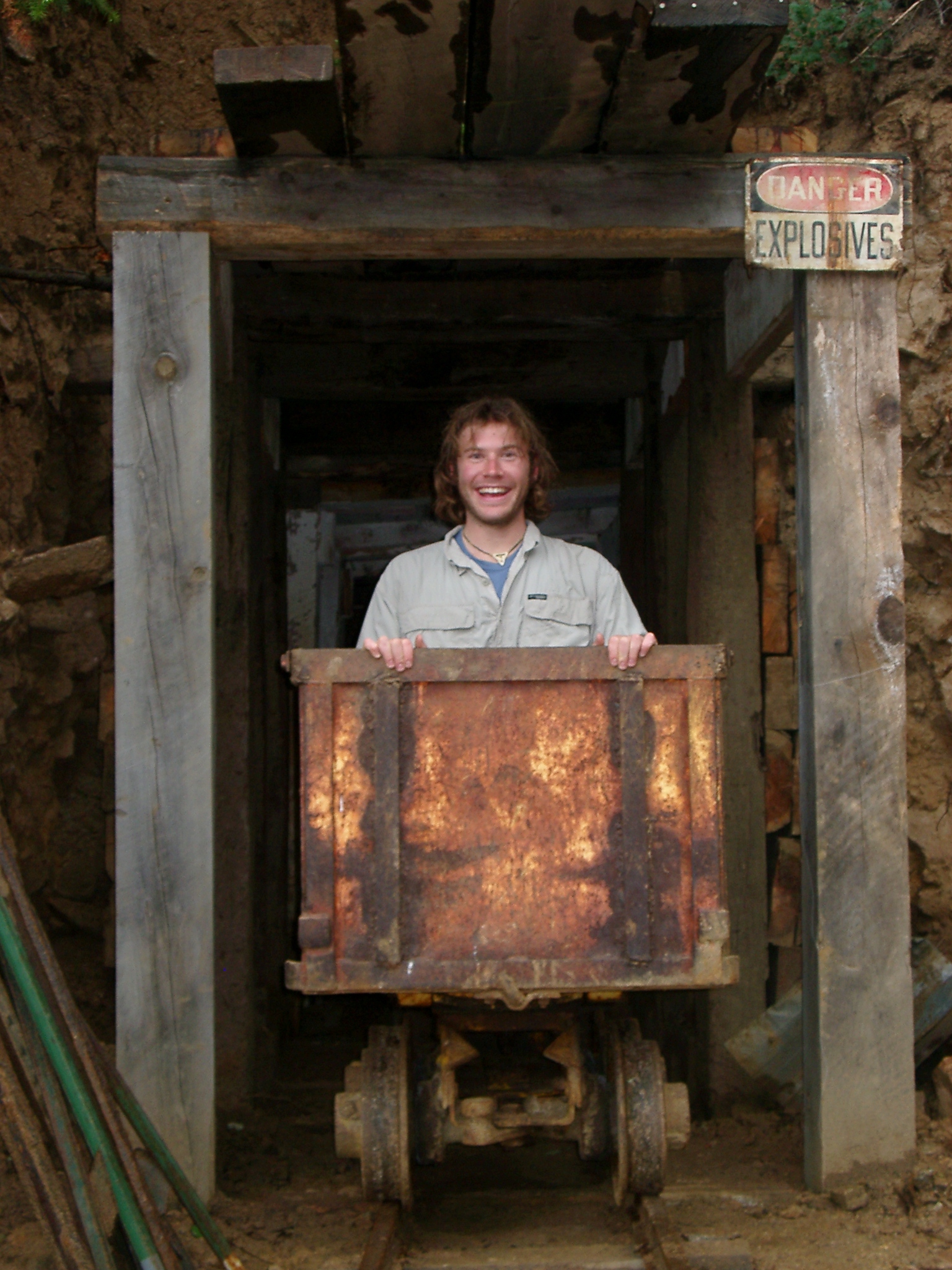
- Formerly active mining area
- Captain Jack Mine Superfund site
- Lefthand Watershed Oversight Group
- Lefthand Creek provides water to 14,000 downstream consumers
- CU has run tracer and sediment tests
|
|
5
|
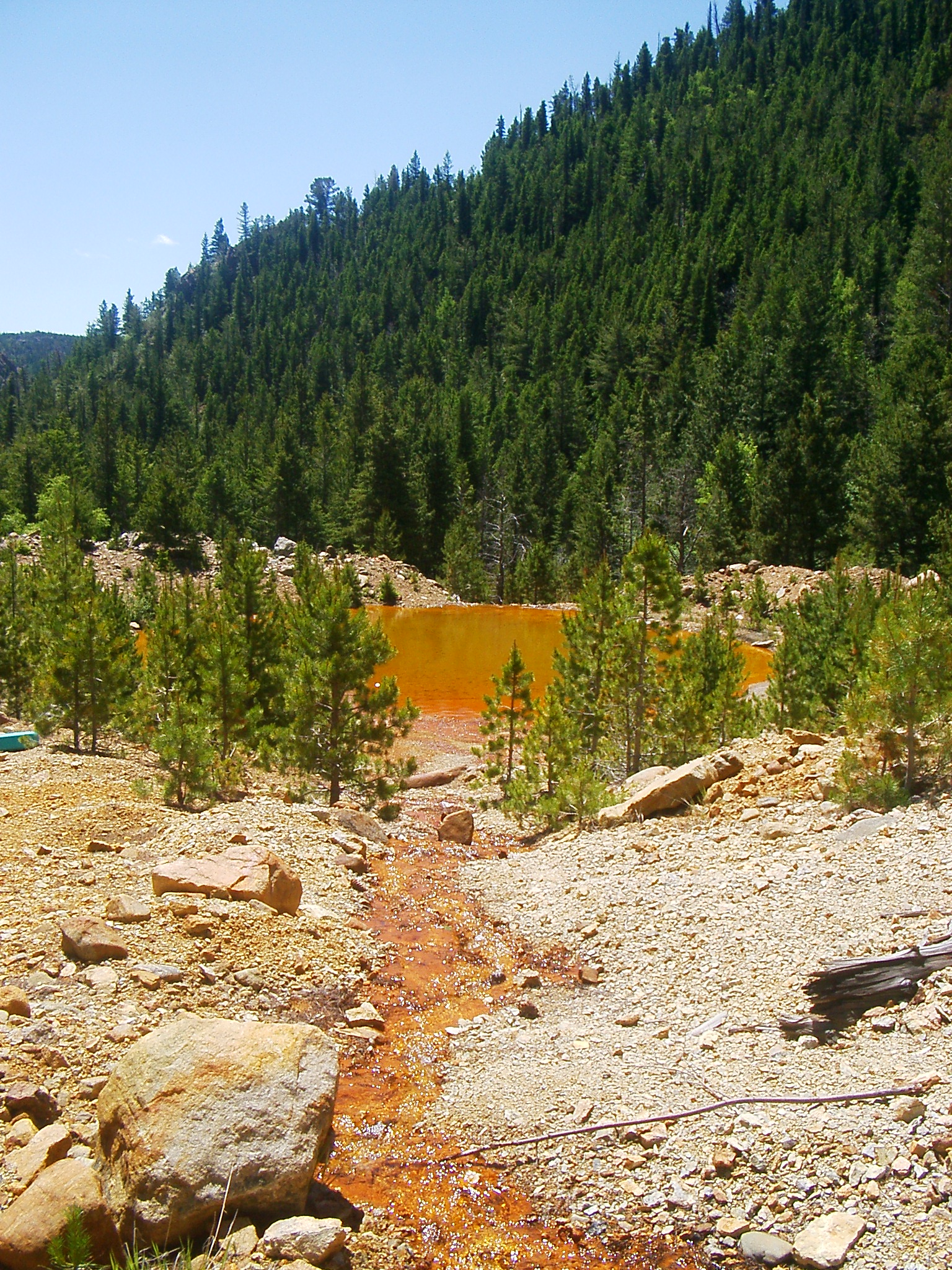
- AMD occurs when water and oxygen contact pyrite
- The pH of the water drops and metals dissolve into the water
- (Younger et al., 2002)
|
|
6
|
- Metals entering creeks from AMD and waste rock
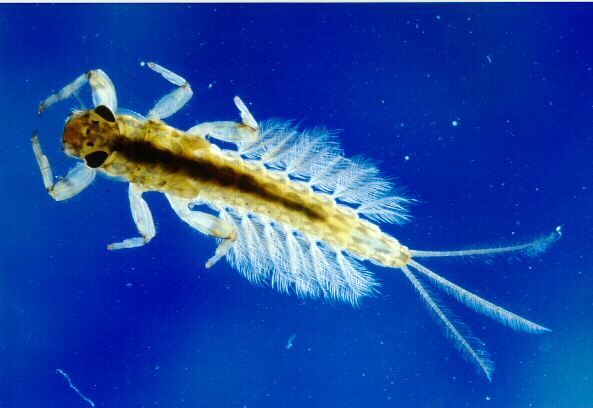
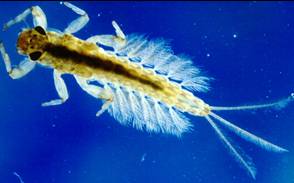
- Sample benthic macroinvertebrates due to bioaccumulation and biomonitors
- Use as a reference data set
- EPA study on species composition in Lefthand Watershed
|
|
7
|
- What amount of trace metals are present in benthic macroinvertebrates
living in Lefthand, James, and Little James Creeks?
- Can macroinvertebrates be used as biomonitors to show areas of metals
contamination?
- Are macroinvertebrates more likely to up take trace metals in dissolved
or sediment form?
- Is the Dissolved Organic Matter in these creeks high enough to affect
metals concentrations?
|
|
8
|
|
|
9
|
|
|
10
|
- Followed methods of Will Clements (Clements, 1991)
- One trial run, one tested run
- Insects placed on dry ice in the field
|
|
11
|
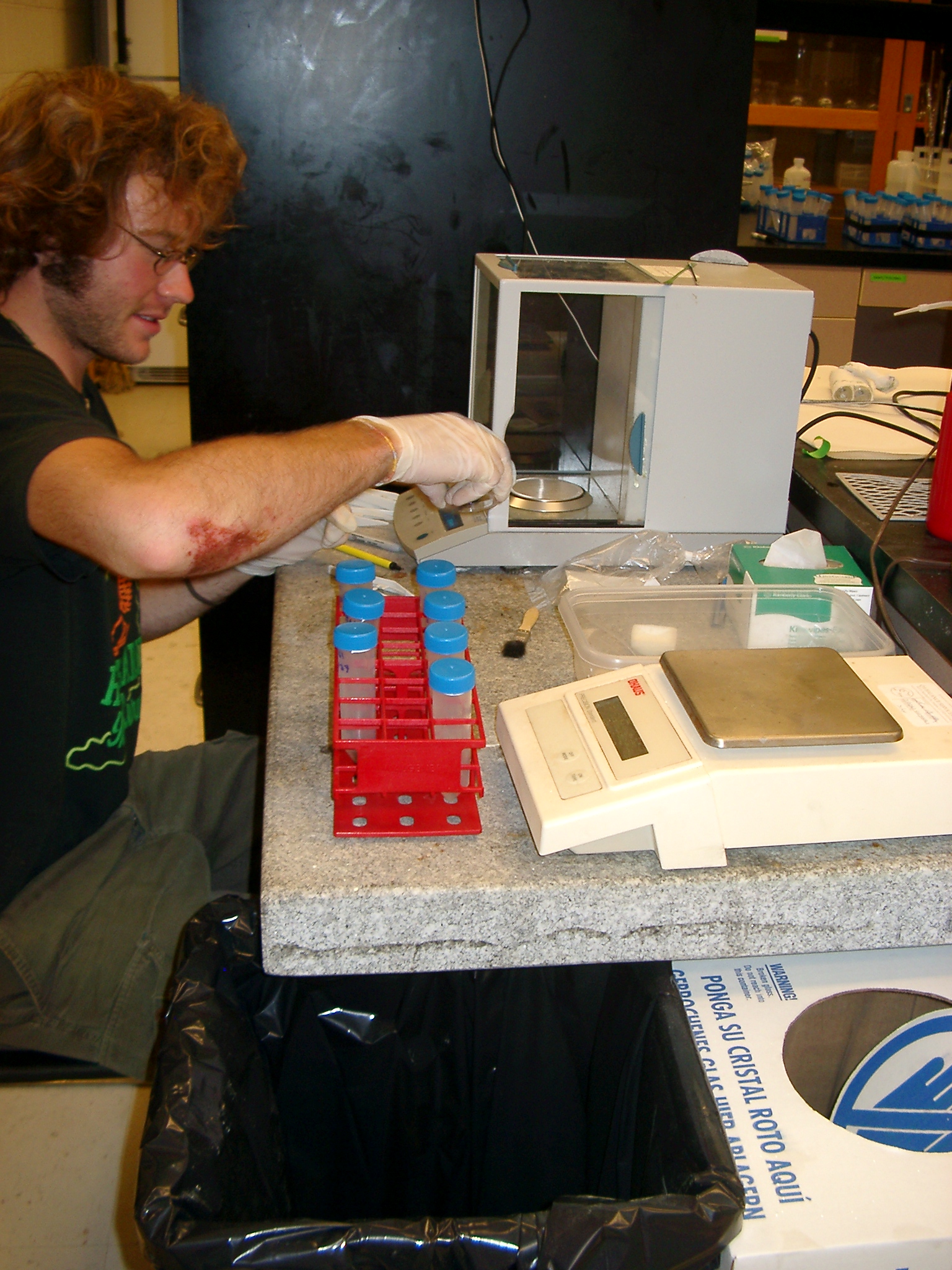
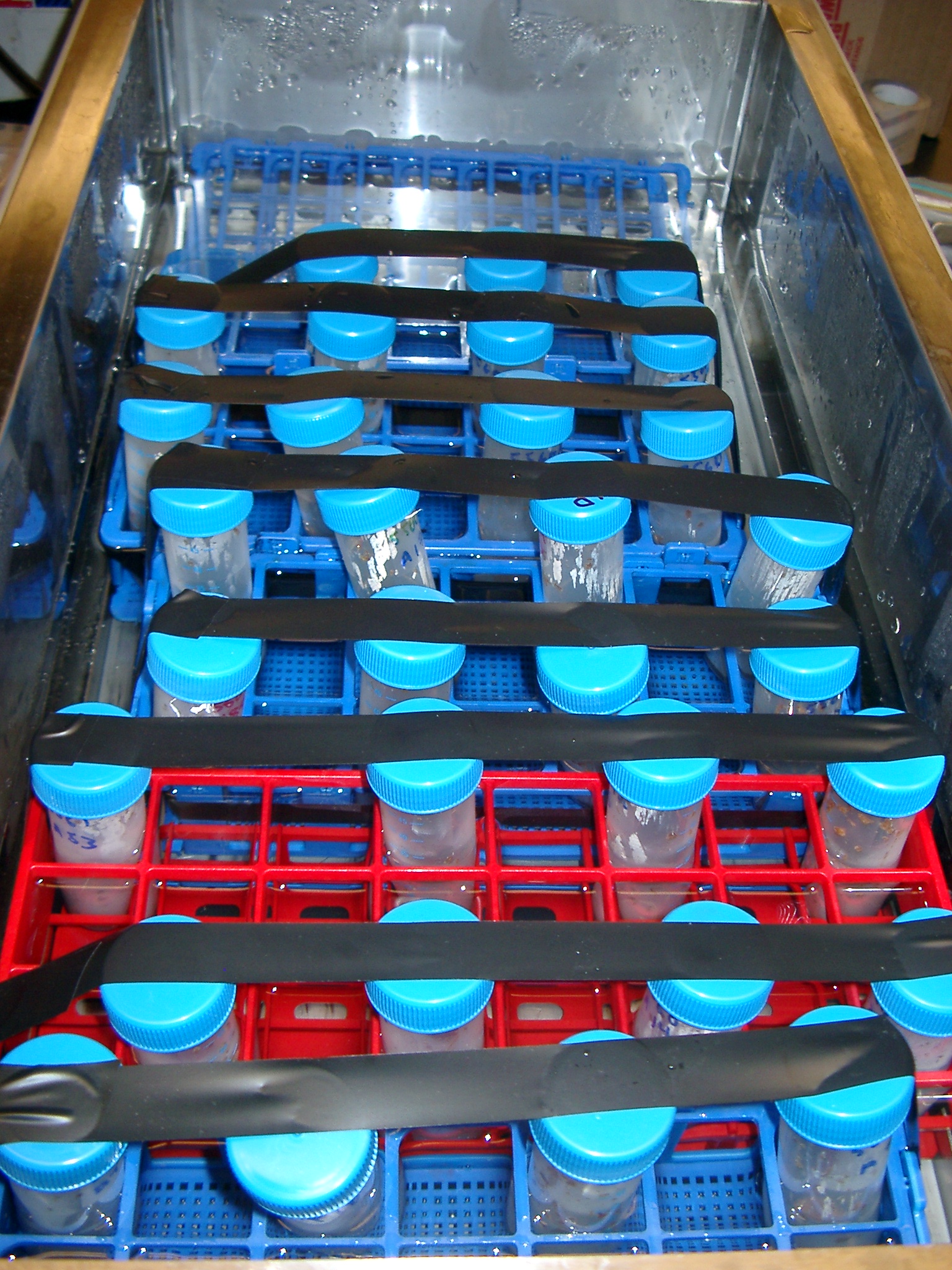
- Insects dried in oven
- Mass recorded to normalize data
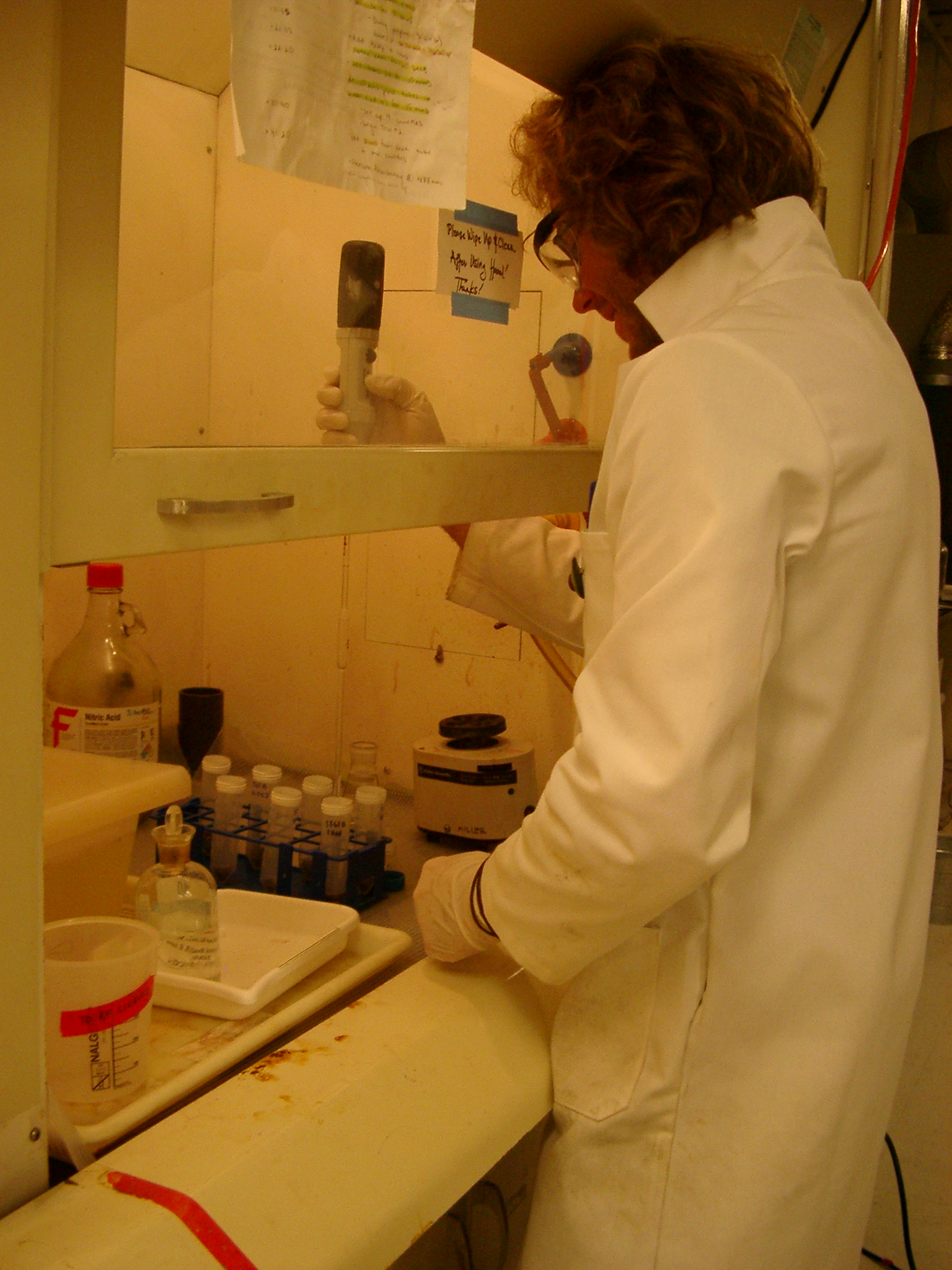
- Added 5 mL of nitric acid and 5 mL of hydrogen peroxide to dried insects
|
|
12
|
- Acid digestion occurred in hot water bath for 6 h
|
|
13
|
- Digested insect solution was tested for: Al, Ag, As, Cd, Cr, Cu, Pb, Se,
and Zn
- Previous CU and EPA research has shown these metals to be in high
concentrations (EPA, 2003; Wood, 2004)
- Solutions tested on ICP-MS at the LEGS lab
|
|
14
|
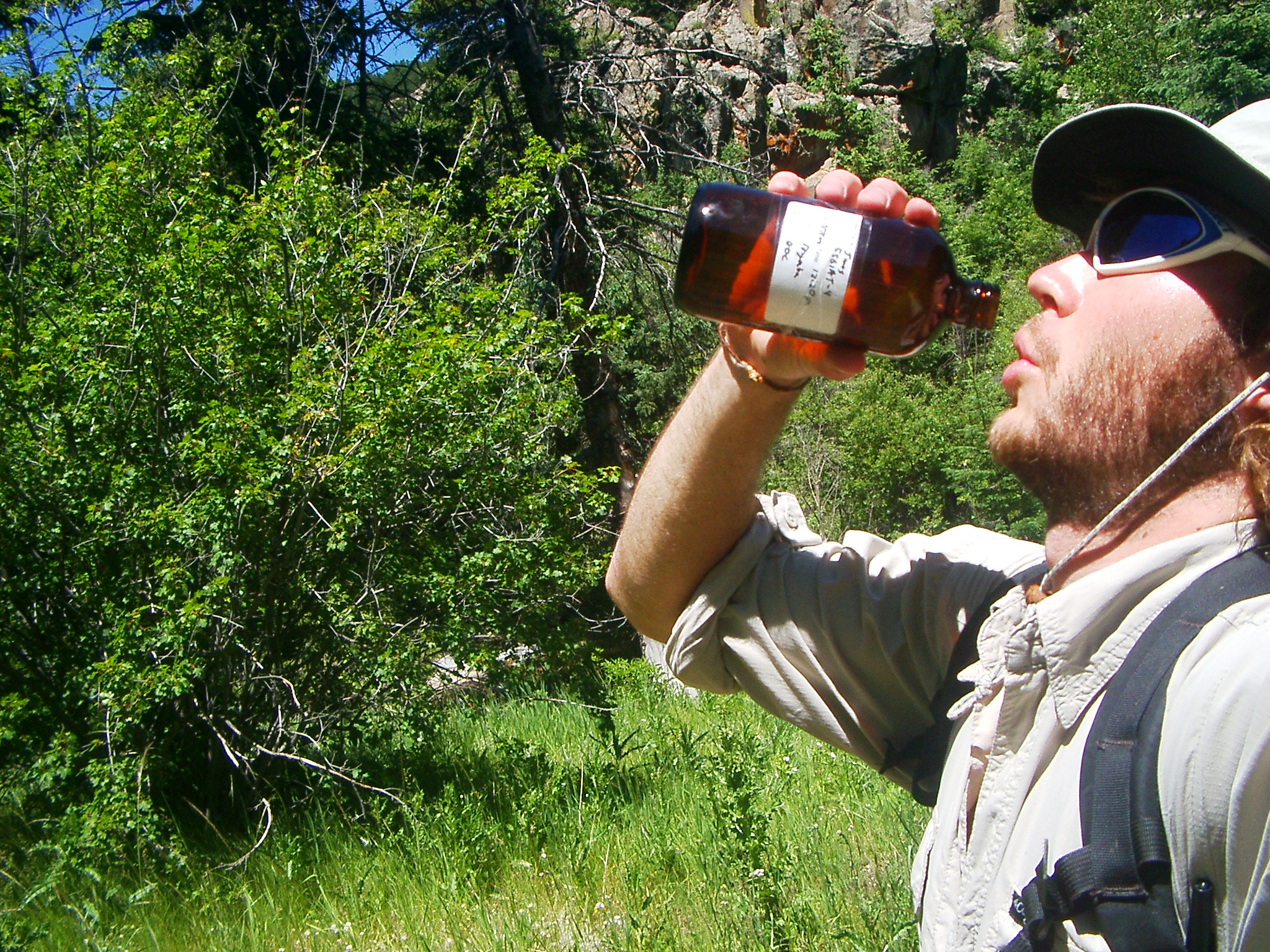
- Dissolved Organic Matter (DOM) can act as a ligand and bind metals
- Measure DOM by testing for DOC in
the same creeks
- (Dahm, 1981; Stephenson; 1988
Hare, 1992)
|
|
15
|
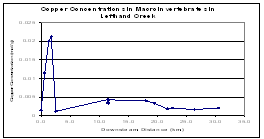
- What amount of trace metals are present in benthic macroinvertebrates
living in Lefthand Creek?
|
|
16
|
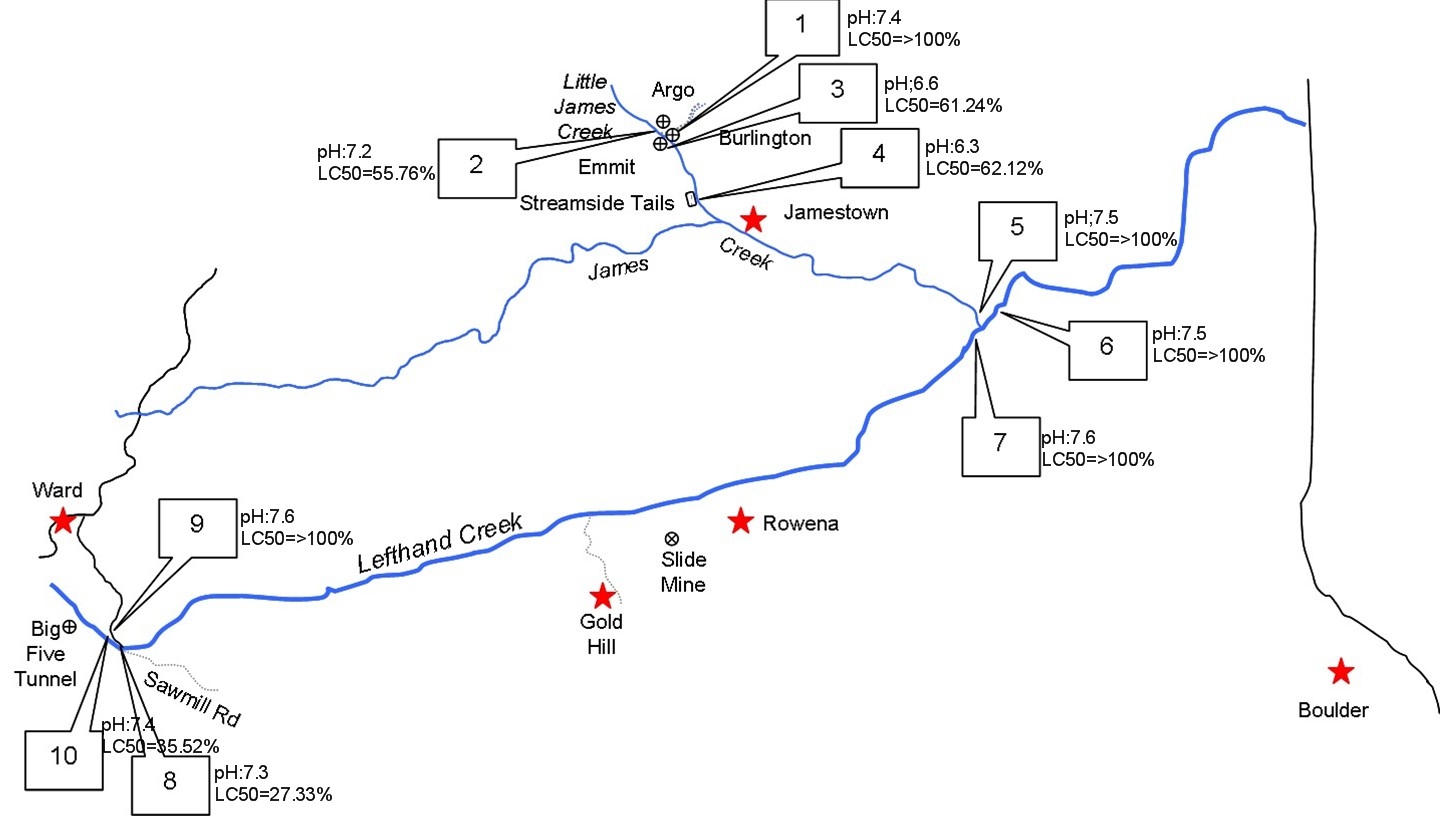
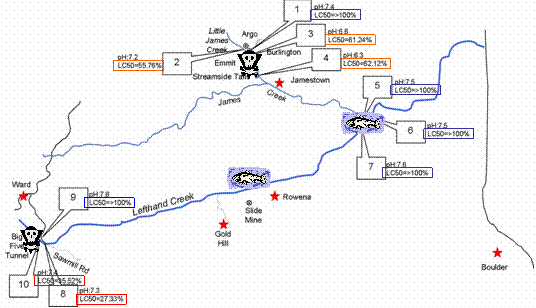
- Aquatic organism toxicity
|
|
17
|
|
|
18
|
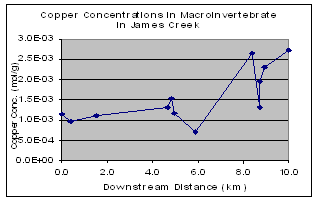
- Can macroinvertebrates be used as biomonitors to show areas of metals
contamination?
|
|
19
|
|
|
20
|
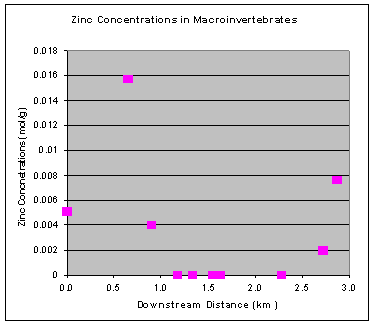
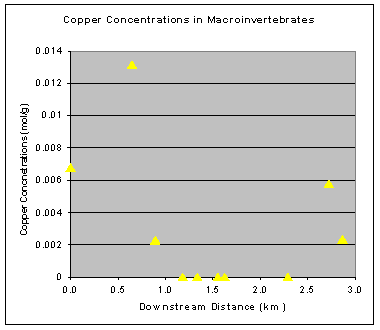
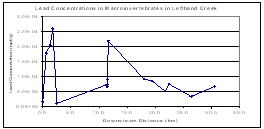
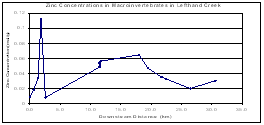
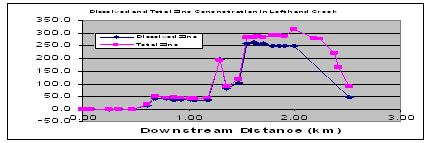
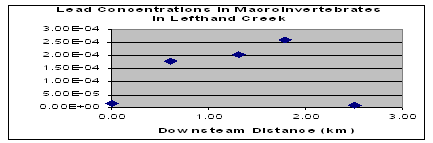
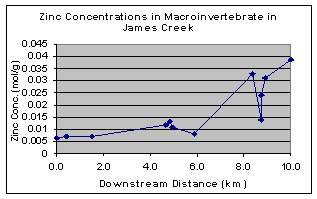
- Are macroinvertebrates more likely to up take trace metals in dissolved
or sediment form?
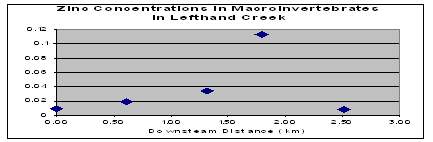
- Zinc more likely to stay dissolved at low pH
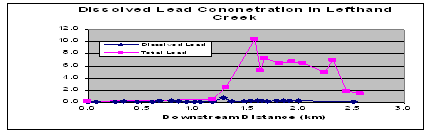
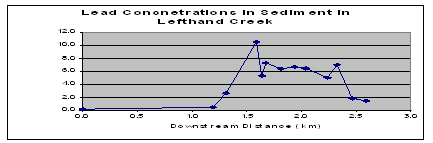
- Lead more likely to remain bound to sediment
|
|
21
|
|
|
22
|
|
|
23
|
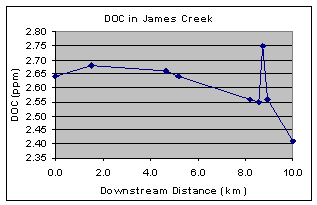
- Lefthand Creek, Mean: 2.5 +/- 0.3 mg C/L
- James Creek, Mean: 2.6 +/- 0.1 mg C/L
- Little James Creek, Mean: 3.9 +/- 0.3 mg C/L
- Pristine streams typically have a [DOC] of 1 – 4 mg
C/L (Allan, 1995)
|
|
24
|
|
|
25
|
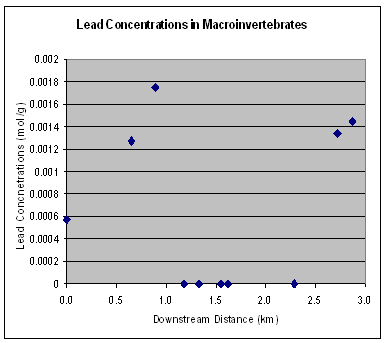
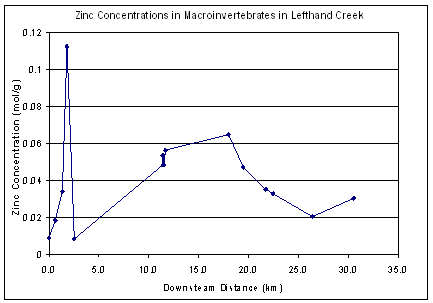
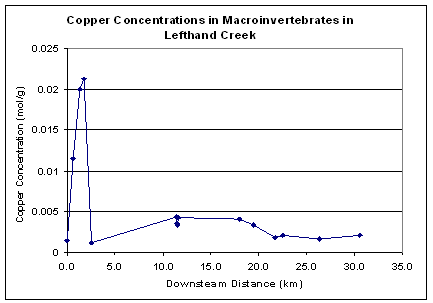
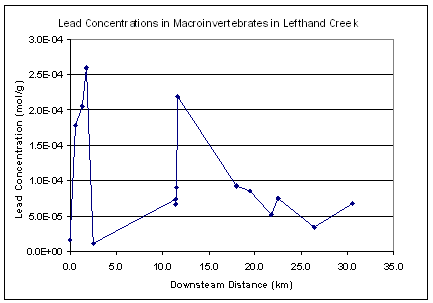
- Macroinvertebrates do accumulate trace metals, some at toxic levels
- Macroinvertebrates are useful indicators of where metals sources are
entering streams.
- Macroinvertebrates may uptake metals in both dissolved and sediment form
depending on the metal
- DOC may have been a significant source of metals uptake
|
|
26
|
- Sample DOC during spring snowmelt
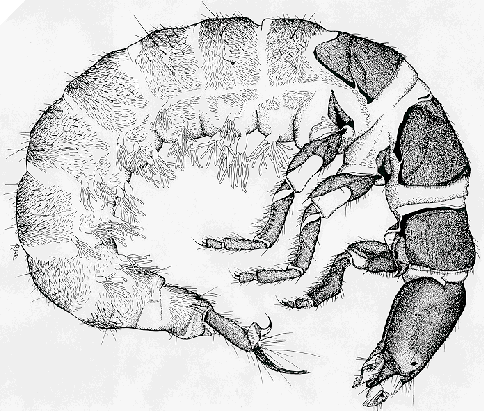
- Sample only one species (Arctopsyche grandis)
- Sample before emergence (May)
- Use same size specimens for testing
- Remove gut contents prior to testing
- Sample moving upstream with one person
- Analyze current data in more detail
|
|
27
|
- Dr. Joe Ryan and Alice Wood
- EPA: Kathy Hernandez, Richard Evans
- CSU: Will Clements, Wally
- Field Volunteers: Pete Kalet, Brendan Cusick, Jamie Fleischfresser,
Amalia Anderson, Andrew Archuleta, Dan Wall, Pete Conovitz, Ned Turner,
USFS volunteers,
- Funding from: REU, LWOG, and EPA
|
|
28
|
- Drew Bryenton
- Dept. of Civil Engineering,
- Purdue University
- bryenton@purdue.edu
|
|
29
|
|

 Notes
Notes